Shelving looks like a single category until you try to buy some. Format matters more than finish, because format decides how much you can store per square foot of floor and how the unit reads in the room. Here is what each one is actually for.
Standard rectangular bookcase
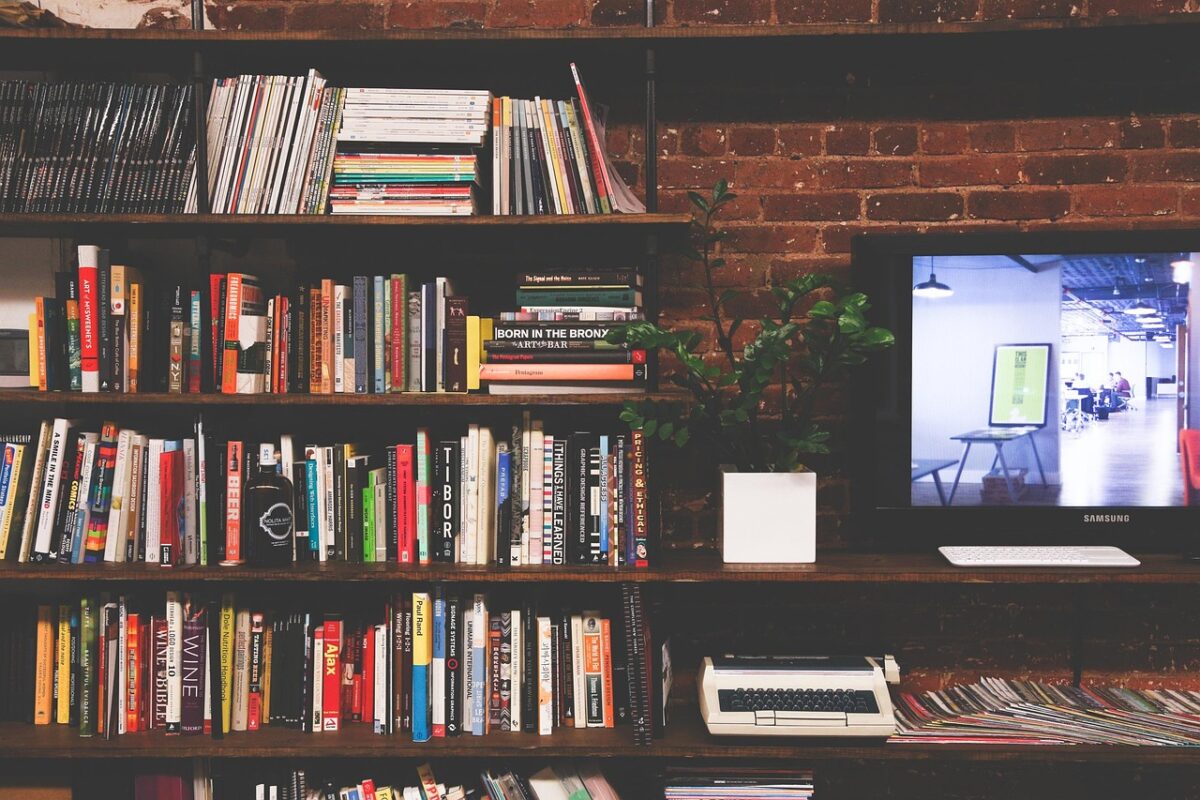
Full-width fixed or adjustable shelves in a rectangular carcass. The highest storage density per square foot of floor of any format, and the cheapest per shelf.
Best for: alcoves, walls you want filled, and anyone whose priority is capacity. Weakness: visually heavy. A tall rectangular block of books dominates a small room, and two of them facing each other narrows it further.
The one detail that matters
Shelf spacing. A unit with six evenly spaced shelves wastes space if your books are mostly paperbacks; adjustable pins let you fit more shelves at paperback height and gain a whole tier.
Ladder shelving
Shelves that step back as they rise, leaning against or fixed to the wall. Depth decreases with height, so the top shelves take very little.
Best for: narrow rooms and hallways, and rooms where you want storage without a solid visual block. The tapering profile keeps the upper half of the wall open, which makes a small room feel taller.
Weakness: capacity. The top shelves are decorative rather than useful — they will not take standard books. Judge a ladder unit on the bottom two shelves only, because that is where the real storage is. Leaning units also must be anchored; the lean is not what holds them up.
Cube shelving
A grid of open squares, usually with optional fabric or wooden inserts.
Best for: mixed storage — some books, some boxed items, some display. The insert system is the point: cubes let you hide the untidy two-thirds and show the presentable third. Also the most child-friendly format, because each cube is a self-contained bin at a defined height.
Weakness: the dividers cost you capacity. A cube unit stores noticeably less than a plain bookcase of the same footprint, and the fixed cube height means tall books do not fit at all.
Rotating tower
A vertical unit on a turntable base, shelved on all four faces.
Best for: corners and small floor areas. A rotating tower with a footprint of about 16 inches square can hold as much as a much wider bookcase, because it uses four faces instead of one. Excellent beside a desk or an armchair, where everything is within reach by turning rather than standing.
Weakness: it needs clearance on all sides to rotate, so it cannot go against a wall in the way its footprint suggests. Depth per face is shallow — paperbacks and CDs yes, art books no. And the bearing is a moving part: check it is rated for the loaded weight.
S-shaped and freestanding sculptural units
Curved or staggered units that work as room dividers as much as storage.
Best for: open-plan spaces where you want to define a zone without building a wall, and for display rather than bulk storage. Weakness: capacity per square foot is the lowest of any format here, and the irregular shelf sizes make it hard to fill neatly. Buy one because you want the shape, not because you need the shelves.
Matching format to room
- Narrow hallway: ladder, or a shallow rectangular unit turned along the wall.
- Alcove: rectangular, every time. It is the only format that uses the full width.
- Children’s room: cube, at child height.
- Beside a desk or chair: rotating tower.
- Studio or open plan: S-shaped or a tall open-backed rectangular unit as a divider.
- Maximum books, minimum budget: rectangular, adjustable shelves, back panel fitted properly.
One rule across all formats
Anchor anything taller than it is wide. It applies to every format on this page and it is the single thing most likely to matter.
Browse the full range in Bookcases & Shelving, or contact us with your room dimensions and we will tell you which formats fit.